I build software for founders who need to get it right.
With a decade of experience shipping products that last, I’m someone who can take full ownership of the technical side, so you can focus on building the business.
You know what you need built and you’re looking for the right person to develop it.
You’ve spent months — maybe years — working your product vision. You understand your market, you’ve done the groundwork, and you know that custom software is the next step. What you need now isn’t a pitch or a proposal, it’s a conversation with someone who can look at your vision and tell you, honestly, what it would take to make it real.
Someone in your network pointed you here. That’s how most of my work begins — not through ads or cold outreach, but through a solid recommendation from someone who has worked with me before. This page is meant to give you a sense of what working together would look like.
My name is Christian Bosque and I’ve spent the last decade building products for founders
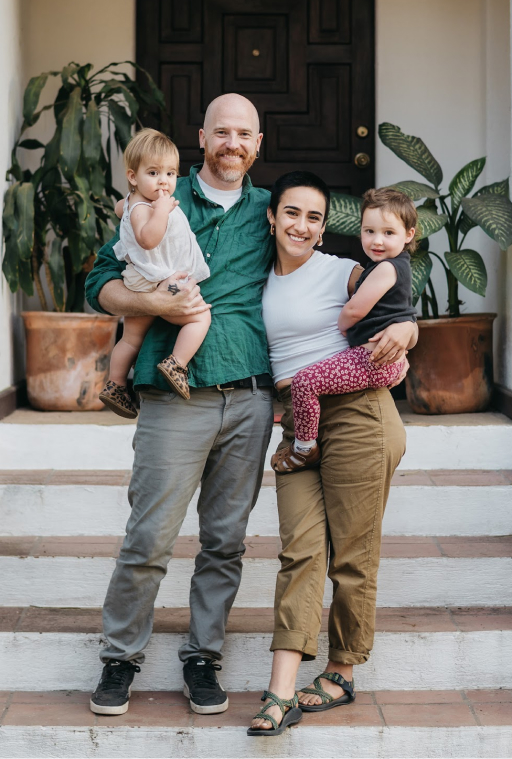
I’m an independent software engineer from Canada, and in 2016 I refocused my career on working exclusively with startup founders who needed someone to take full ownership of the technical side of their business.
I’ve helped launch a number of successful businesses where custom, public facing software was an integral part of their business model. I thrive in small, focused team environments.
The way I work is simple: while I’m building your product, there are no layers between us — no project managers, no junior developers, no hand-offs. I’m responsible for everything from architecture to visual design to development to deployment. There’s no part of your tech stack that I won’t be intimately familiar with; no gaps, no chasing down answers.
Every successful build needs a clear method behind it. Here’s mine — from the first conversation to long after launch.
Discovery
Two or three working days at the start of every engagement. You walk me through the vision, the market, and the constraints. I ask the questions that matter and give you an honest read — what the build will take, what the risks are, and whether I’m the right person for this particular product. Together we agree on the shortest path to a working MVP: which features make the first cut, which ones wait, and which ones should be cut entirely. By the end, you have a clear technical picture of what it would take to bring your product to market — regardless of whether we keep working together.
Base Platform
Every product needs a working foundation — authentication, billing, hosting, monitoring, the parts that aren’t unique to your business but are essential for it to function. Because most of this is pre-built and battle-tested, it ships in about two weeks for a fixed cost. The time you save here gets reinvested where it actually differentiates your product: in the custom work that follows.
Custom Work
This is where most of the engagement lives. The features that make your product specifically yours are scoped during discovery, then planned into digestible sets — each one a self-contained piece of functionality with a tangible outcome you can see and use. Within each set, the same short loop repeats: a focused build, a QA pass where you review the working feature in your hands, then ship. Every loop produces something real you can react to, which means course corrections happen early — while the cost of changing direction is still small.
Launch isn’t a finish line
At some point the work in flight becomes the work in production. Real users start supplying the evidence that, until now, has come from you and from my experience with similar products. The loop doesn’t change — same scope, same build, same QA, same ship — but the inputs do. What seemed important in theory gets tested against what’s actually important in practice. The next set of features gets shaped by what real usage reveals.
Stepping back
The earliest months are where my involvement matters most: architecture, foundational decisions, the calls that are expensive to undo later. As those settle, my role naturally shifts. Many engagements end with me transitioning out of day-to-day development as a more junior developer takes over, while I stay on in an advisory capacity — there to protect the technical foundation without billing for work that no longer needs me. The model is built to step back when it should.
I believe in being straightforward about costs. There are three components to an engagement, and each one is clearly defined.
Discovery
A paid working session where we determine whether there’s a genuine fit. You walk me through your vision, I assess what it would take to build, and we both decide if this is the right partnership. If we move forward, this session becomes the foundation for everything that follows. If we don’t, you walk away with a clear, detailed technical picture of what your product needs — something valuable regardless of what you decide to do next.
Base Platform
Every software product needs a foundation — the infrastructure that isn’t unique to your business but is essential for it to function. Depending on what your product requires, this might include user authentication, billing and payment processing, notification systems, a content platform, hosting, and monitoring. A lean foundation starts around $15,000. A more fully featured platform runs up to $35,000. We determine exactly what you need during discovery, so there are no surprises.
Custom Work
This is the heart of the product — the business logic, workflows, and features that make it uniquely yours. This work is scoped during discovery and built in short cycles with complete transparency. You’ll always know where your investment is going and what it’s producing.
Honest answers to the questions founders ask most before we talk.
What if the project doesn’t work out
That’s what discovery is designed to prevent. By the time we commit to a full build, we’ve both had a thorough look at what we’re building, why it matters, and whether the partnership makes sense. I don’t take on projects I don’t believe in, and I’d rather tell you that up front than let you find out the hard way.
How involved do I need to be
You stay involved in the decisions that shape the business — priorities, direction, trade-offs — while I own the technical execution entirely. You’ll always know what’s happening and why, communicated in language that’s clear and direct. The goal is for you to feel informed and in control without needing to manage the build.
How is this different from hiring an agency
At an agency, your project is one of many. Communication passes through account managers, work gets distributed across teams, and there’s no single person who’s accountable for the whole. Here, it’s just me. I’m personally responsible for your product from start to finish, and there’s nothing between us but the work itself.
Can you handle a larger project
Yes. I’ve hired and managed teams of developers when the scope of a project required it. The model scales, but the accountability stays the same — I remain the single point of contact and the person ultimately responsible for what gets shipped.
What happens when something goes wrong
I tell you. Directly, in plain language, with a clear plan for how we fix it. Problems are inevitable in any build — what matters is how they’re handled. I’d rather surface an issue early and deal with it honestly than let it grow quietly in the background.
Who owns the code
You do. Everything I build — the codebase, the infrastructure, the documentation — belongs to you completely. If we ever part ways, you’ll have a well-organized product that any competent developer can pick up and continue building on.
Let’s find out if there’s a fit.
The first step is a conversation. No commitment, no pressure — just an honest look at what you’re building and whether I’m the right person to help you build it.